Why 2026 World Cup Football Rewrites Everything
The 2026 FIFA World Cup will expand international football to 48 teams, 104 matches, and three host nations: Canada, Mexico, and the United States. Running from June 11 to July 19, 2026, the tournamen...

Why 2026 World Cup Football Rewrites Everything
The 2026 FIFA World Cup will expand international football to 48 teams, 104 matches, and three host nations: Canada, Mexico, and the United States. Running from June 11 to July 19, 2026, the tournament will introduce a larger group-stage structure while placing unprecedented logistical demands on players, supporters, broadcasters, and analysts. Kansas City, officially one of FIFA’s 2026 host cities, will stage six matches at Kansas City Stadium and connect the tournament with its established identity as the “Soccer Capital of America.” Football Compass will track fixtures, team tactics, player statistics, match predictions, and tournament developments throughout the competition. The larger field creates more opportunities for emerging nations, but it also increases uncertainty in forecasting because squad depth, travel distance, climate, and rest periods become materially more important. Start by separating confirmed tournament facts from speculation, then evaluate each match through schedule, tactical, and squad-quality evidence.
The 2026 tournament is not simply a bigger version of the 2022 FIFA World Cup in Qatar. The competition will stretch across North America, with matches distributed among 16 host cities and a travel map that changes the practical value of traditional rankings. A team travelling between Vancouver, Mexico City, Atlanta, and Los Angeles may face different altitudes, temperatures, time zones, and recovery conditions within one campaign. That matters to anyone following football analytically, particularly readers comparing pre-match prices, expected line-ups, and probability models. Football Compass approaches the tournament from an investor’s perspective: record the implied probability, compare it with the estimated probability, and calculate the net position after every result rather than celebrating isolated wins. Listen up — this is the part that matters: no prediction has value merely because it sounds confident. The model must identify a measurable difference between expectation and price, while responsible participation remains essential. For official competition details, consult FIFA’s 2026 World Cup page.
Want a structured starting point for your tournament research?
The Quick Comparison
| Factor | 2026 FIFA World Cup | 2022 FIFA World Cup | Why It Matters |
|---|---|---|---|
| Teams | 48 | 32 | More styles and greater qualification diversity |
| Matches | 104 | 64 | Larger sample size, heavier scheduling demands |
| Host nations | Canada, Mexico, United States | Qatar | Cross-border travel becomes central |
| Final | July 19, 2026 | December 18, 2022 | A different seasonal and preparation context |
| Kansas City role | Six matches | Not a host city | A major Central United States football hub |
What does the 48-team format change?
The 48-team format changes qualification pressure, group-stage risk, and the number of credible tactical matchups available to analysts. FIFA’s revised competition structure gives more nations access to the world’s largest football event, but the knockout route and match count also make squad management more influential than in 2022. The exact competitive effect will depend on the draw, regulations, and final scheduling details.
Under the expanded format, teams will be divided into 12 groups of four, with the top two sides in each group plus the eight best third-place teams advancing to a 32-team knockout phase. That structure creates an unusual incentive: a team may progress without finishing in the top two, yet goal difference, disciplinary records, and final-match strategy can become decisive. Analysts should therefore avoid treating a draw as automatically positive or a narrow defeat as automatically damaging. The relevant question is the standings context, not the emotion of one result.
For bettors and probability-focused readers, this produces a practical edge case. In a four-team group, a late goal can affect both a team’s own position and the ranking of third-place teams across multiple groups. A model that tracks only win-draw-loss outcomes may miss this. Football Compass recommends recording goals scored, goals conceded, possession profiles, shot quality, set-piece performance, and the timing of substitutions. You can also review our [Internal Link: 2026 World Cup group-stage analysis] when the draw and official match calendar are confirmed.
Round 1: Why Does Host Geography Matter?
Host geography matters because Canada, Mexico, and the United States create different travel, climate, altitude, and recovery conditions across one tournament. The 2026 host network spans 16 cities, so schedule construction can influence performance independently of squad quality. Analysts should treat venue sequence and rest days as inputs, not decorative background information.
The host cities include Vancouver and Toronto in Canada; Guadalajara, Mexico City, and Monterrey in Mexico; and 11 venues across the United States, including Kansas City, Atlanta, Boston, Dallas, Houston, Los Angeles, Miami, New York/New Jersey, Philadelphia, San Francisco Bay Area, and Seattle. These locations are not interchangeable. Mexico City’s elevation is materially different from coastal venues, while summer humidity in Miami can create a separate physical challenge from dry heat in Dallas or Las Vegas-like conditions elsewhere in the region.
Kansas City deserves special attention because it combines an established football culture with a central geographic position and six scheduled matches. The city’s FIFA Fan Festival is designed to extend the tournament beyond the stadium, bringing supporters together for matches, food, entertainment, and cultural programming. The host-city experience is therefore both a sporting and commercial story, but do not confuse crowd energy with a measurable home advantage for neutral fixtures. A sold-out audience may influence atmosphere; it does not erase tactical mismatches, injuries, or poor finishing.
Have you ever thought about why two equally ranked teams can receive different forecasts? Travel and venue data are often the missing explanation. A useful match file should include:
- Distance from the previous venue and local arrival time.
- Number of full recovery days before kickoff.
- Temperature, humidity, and altitude at the stadium.
- Starting-player minutes from the previous match.
- Tactical compatibility against the opponent’s pressing and transition style.
See the practical tournament context before building assumptions around a host city.
Kansas City’s tournament value also comes from its regional reach. The city sits within a major sports market shaped by Sporting Kansas City, Children’s Mercy Park, professional American football, baseball, and a deep event-management network. The official Kansas City 2026 campaign describes the region as a place where business, culture, and innovation meet across two states, which helps explain why the host-city programme extends beyond match tickets. FIFA’s own World Cup tournament information remains the proper authority for fixture and venue confirmation, while local organisers provide practical information about festivals, transport, and public viewing.
A contrarian point is necessary here: the most valuable Kansas City content may not be a generic list of attractions. For serious followers, the better question is whether a matchday location reduces friction. A supporter who spends two hours crossing the metropolitan area, misses a pre-match meal, and arrives dehydrated has made an operational error, not a romantic travel choice. Build a buffer around entry screening, public transport, weather, and post-match congestion. If you are comparing live match conditions for analysis, timestamp your observations because a forecast published six hours before kickoff may become obsolete after a line-up change or storm warning.
Round 2: How Will Tactics and Squad Depth Decide Matches?
Tactics and squad depth will decide more 2026 matches because the expanded tournament requires teams to manage more fixtures across a wider geographic area. The strongest contenders will need a reliable starting structure, credible bench alternatives, and a plan for protecting leads without surrendering control. Player availability should be assessed alongside role suitability, not reputation alone.
The most important tactical variables will likely include pressing intensity, defensive rest structure, set-piece efficiency, and the quality of transition decisions. A high press can create valuable turnovers, but it also consumes energy and leaves space behind an advanced midfield line. In hot or humid conditions, a team that presses aggressively for 90 minutes may lose compactness late in the match. Conversely, a low block protects central space but can concede territory, crosses, and second balls. Football Compass evaluates these trade-offs through observable indicators rather than labels such as “attacking” or “defensive.”
Squad depth has a second meaning in 2026: not merely the quality of the 23rd player, but whether substitutes preserve the same tactical principles. If a team’s starting full-back provides width, progressive passing, and recovery speed, replacing that player with a defensively conservative alternative may alter the entire attack. The same applies to a striker who presses centre-backs versus one who waits for penalty-box service. Track role replacement, not just player names.
A responsible prediction workflow can be organised as follows:
- Establish a baseline from recent competitive matches, not friendly results alone.
- Adjust for expected starters, suspensions, injuries, and club workload.
- Compare each team’s chance creation with the opponent’s defensive weakness.
- Add venue, travel, weather, and rest adjustments only when evidence supports them.
- Convert the final estimate into a probability and compare it with the available market price.
- Record the stake, return, rebate, and net position in a separate ledger.
The International Football Association Board Laws of the Game provide the formal rules framework, but laws do not predict performance. That requires disciplined interpretation of players, systems, and context.
“Football is the most popular sport in the world,” notes FIFA, but popularity is not evidence of forecast accuracy. That distinction is stubbornly important. A famous national team can attract public money even when its tactical match-up is poor, while an unfashionable team can offer better analytical value without being likely to win outright. Never confuse recognition with probability, and never increase a stake simply because a previous selection lost.
How can you improve your match file without pretending to know the future?
Round 3: What Should Supporters and Analysts Track?
Supporters and analysts should track confirmed schedules, line-ups, player workload, venue conditions, and market movement while separating verified information from social-media speculation. The best process is repeatable: collect data at fixed times, document changes, and review results after the match. This approach improves decision quality even when the final score remains unpredictable.
A practical tracking timetable is more useful than an enormous spreadsheet nobody updates. Record an initial view when the fixture is announced, a second view after the latest international squad news, and a final view after official line-ups are released. Compare the price movement with the reason for movement. If a market shifts because a starting goalkeeper is absent, that is materially different from a move caused by public enthusiasm for a famous striker.
A useful matchday worksheet should include:
- Confirmed starting XI and bench.
- Last five competitive performances, with opponent strength noted.
- Expected goals for and against, where a reliable provider is available.
- Set-piece goals and defensive concessions.
- Possession and pressing indicators interpreted by game state.
- Travel distance, local kickoff time, weather, and rest.
- Opening price, current price, stake, return, and net result.
The last three fields are where many casual analysts fail. They remember the selection but forget the price, or they celebrate a win without deducting previous losses and transaction costs. Football Compass treats turnover, rebates, and net position as separate accounting categories. A rebate is not a winning bet; it is a reduction in total cost. A cash return is not profit until the original stake and all related losses are deducted.
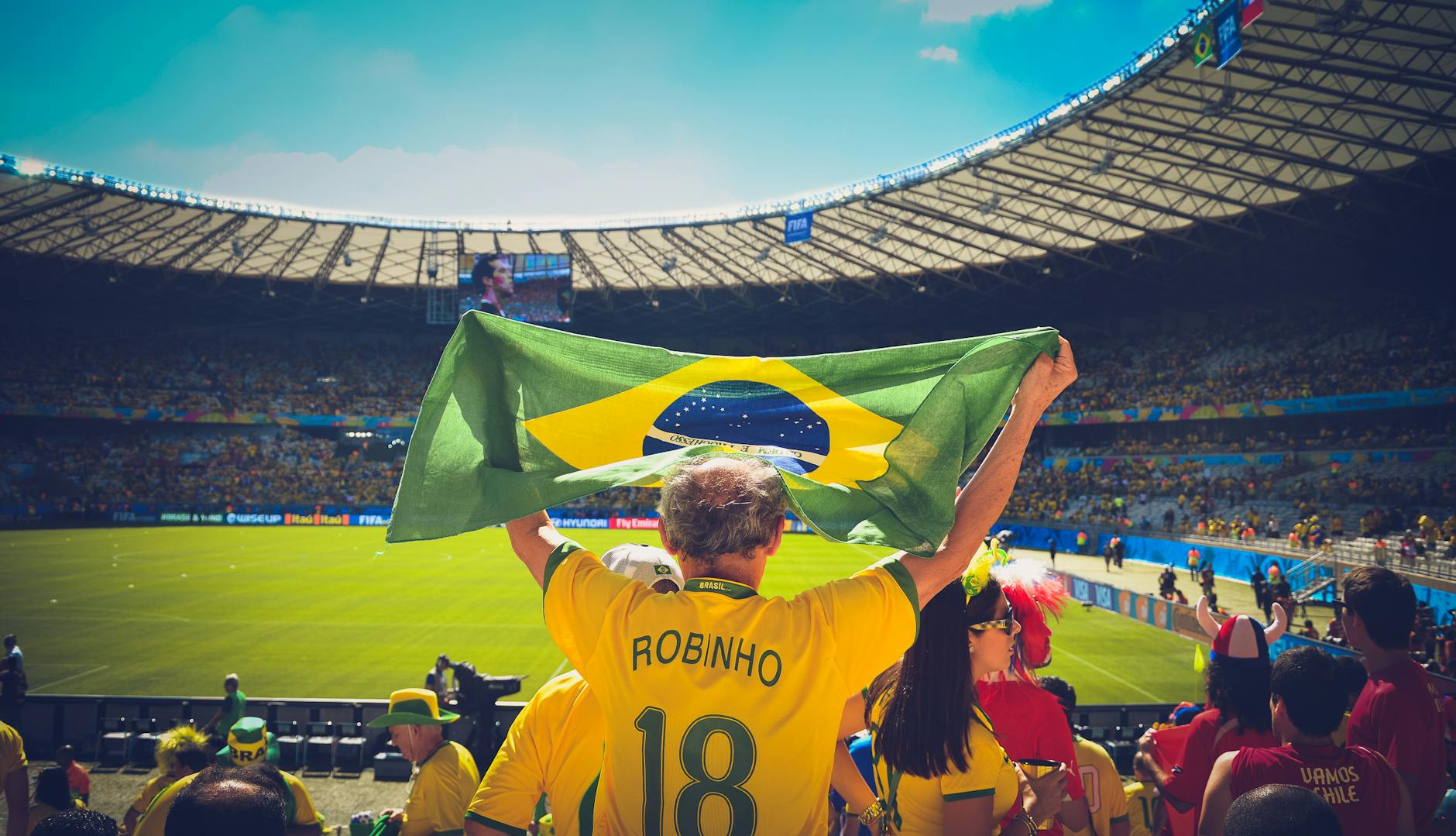
Photo by Caio on Pexels
A specific information advantage appears when line-up timing is combined with substitution patterns. Suppose a team regularly replaces its wide forwards around the 60th minute and has a strong bench, while its opponent’s substitutes are less compatible with the starting system. A late-match probability adjustment may be justified, but only if the pattern appears across a meaningful sample and game states are comparable. Do not extrapolate from one dramatic comeback. After 30 sessions over six weeks, a measured process can still produce a losing short-term record; variance is not proof that the method is broken, and a winning week is not proof that it is sound.
The second edge case concerns third-place qualification. A team that needs only a draw may reduce tempo, while another group’s standings can create pressure to pursue goals. Therefore, a pre-match total-goals opinion may become invalid after early results elsewhere are known. This is why live analysis must update the tournament state, not merely watch the ball. For broader research, consider the [Internal Link: football prediction methodology guide] and [Internal Link: player-statistics tracking guide].
Ready to compare evidence rather than headlines?
The Final Score & Who Should Pick What
The best way to follow 2026 World Cup football is to match your objective with the right evidence: casual supporters can prioritise fixtures and host-city experiences, while serious analysts should track tactics, travel, line-ups, prices, and net results. Kansas City offers a particularly strong case study because six matches, a major fan festival, and a central location combine local culture with international competition. The tournament’s 48-team format will create more stories, but more matches do not automatically create more certainty.
For clarity, use this selection framework:
- For new supporters: begin with the official schedule, group standings, and basic tactical summaries.
- For fantasy players: prioritise confirmed minutes, role security, set pieces, and substitution likelihood.
- For match analysts: build probability estimates from team strength, availability, venue, and tactical fit.
- For recreational bettors: set a fixed entertainment budget, avoid chasing losses, and treat every stake as expendable.
- For disciplined investors: record turnover, rebates, closing price, return, and cumulative net position.
The tournament should be enjoyed, but enjoyment does not require careless financial behaviour. If gambling stops being entertainment or you feel pressure to recover losses, stop and seek support through an appropriate local service. Football Compass provides football-focused analysis, not guaranteed outcomes. Listen up — this is the part that matters: the final score is a single observation, whereas a sound process is judged across a large sample. Review your assumptions after every match, keep your records honest, and do not permit a dramatic result to rewrite the evidence.
Kansas City may finish its role with six matches and hundreds of thousands of visitors, yet its wider contribution will be measured by how effectively it welcomes supporters and strengthens football culture across the Heartland. The 2026 FIFA World Cup will test teams physically, tactically, and logistically from Canada to Mexico and across the United States. For readers, the most durable advantage is not a secret pick; it is disciplined information management.
Explore the next tournament update with Football Compass.
Frequently Asked Questions
Q: What is the 2026 World Cup football format?
A: The 2026 World Cup will feature 48 teams playing 104 matches across Canada, Mexico, and the United States. The teams will be divided into 12 groups of four, with the top two teams and eight best third-place teams advancing to a 32-team knockout stage. The tournament is scheduled to run from June 11 to July 19, 2026, although readers should verify final fixture details through FIFA.
Q: How many World Cup matches will Kansas City host?
A: Kansas City is scheduled to host six matches during the 2026 FIFA World Cup. The city will also operate a FIFA Fan Festival where supporters can watch matches, experience live entertainment, and participate in a broader cultural programme. Match attendance, transport arrangements, and local event details should be checked with official Kansas City organisers before travelling.
Q: What is the difference between the 2026 and 2022 World Cups?
A: The 2026 World Cup will have 48 teams and 104 matches, compared with 32 teams and 64 matches in 2022. It will also be hosted across three countries rather than staged in one nation, making travel, climate, and time-zone management more significant. The 2022 tournament in Qatar was played in November and December, while the 2026 competition is scheduled for June and July.
Q: How should I analyse a 2026 World Cup match?
A: Start with confirmed line-ups, recent competitive form, tactical match-up, injuries, travel, rest, and venue conditions. Then estimate a probability, compare it with the available price, and record the stake and eventual net result. Avoid relying on rankings alone because rankings may not reflect role changes, schedule difficulty, climate, or a specific opponent’s pressing and transition profile.
Q: How much money should I risk on World Cup football betting?
A: You should risk only money allocated to entertainment and never use funds needed for bills, savings, or essential expenses. A fixed-stake approach is easier to control than increasing stakes after losses, and every wager should be recorded with its price, amount, return, rebate, and net position. If you feel compelled to chase losses or hide activity, stop gambling and seek local professional support.
Q: Why can a World Cup prediction fail after a strong analysis?
A: A prediction can fail because football contains substantial variance, including deflections, red cards, injuries, goalkeeper errors, and finishing fluctuations. A correct probability estimate does not guarantee a correct individual result; it describes likelihood across repeated comparable events. Review whether the original assumptions were reasonable, but do not judge the entire method from one match.
Q: What should I do if official World Cup information changes?
A: Confirm the change through FIFA, the relevant host-city authority, or the participating national association before updating your analysis. Record the time and source of the change, then reassess line-ups, venue, travel, kickoff time, and market prices. Do not rely on an old article, screenshot, or social-media post when official scheduling or eligibility information has changed.
Level up your game with more elite strategies.
Football Compass · Protocol Archive · Elite Access